
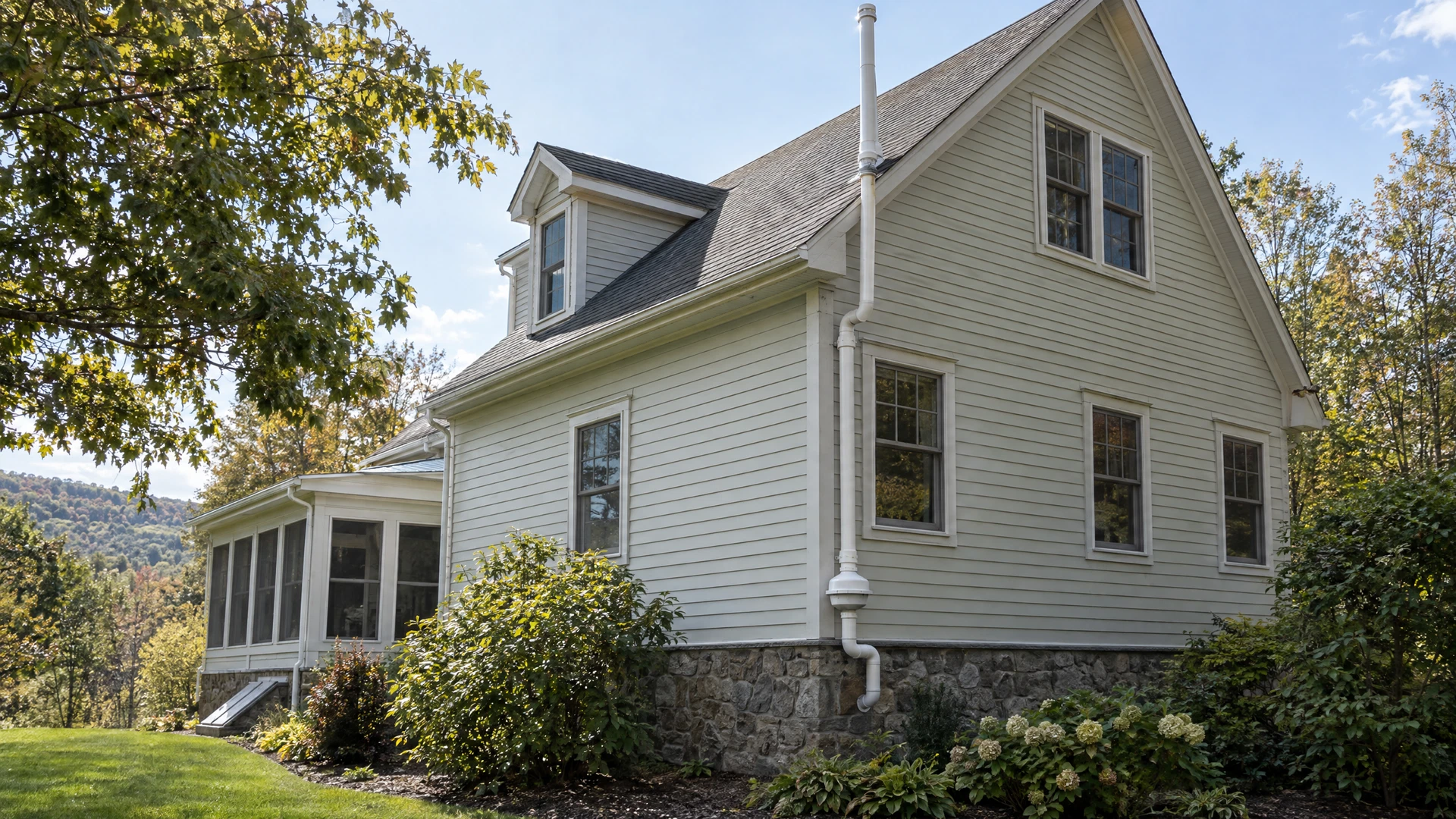
An elevated radon result gives you a reason to act, but it does not tell you which reduction system fits your home. GR8 Home Inspections offers radon testing and radon mitigation in Greater Binghamton and the Southern Tier. Start with your report and a conversation with owner Doug Skinner about the property and your next steps.
Testing measures radon; mitigation works to reduce it. Keeping those roles separate helps you ask useful questions before work begins and check the outcome afterward. Whether you are buying a home or addressing a concern where you already live, the discussion should cover the proposed scope, access requirements and how performance will be verified.
Start with the result, not an assumed fix
EPA recommends fixing homes with radon levels of 4 picocuries per liter, written as pCi/L, or higher. It also recommends considering reduction between 2 and 4 pCi/L. The action level is not a boundary between safe and unsafe exposure; EPA states that there is no known safe level of radon exposure.
Share the complete report rather than just the number. The test duration, location and conditions help frame whether further measurement is appropriate before choosing a reduction approach. If you do not have a result yet, GR8 also offers radon testing. A general home inspection does not substitute for that measurement.
How active soil depressurization works
Active soil depressurization is a common radon reduction approach. In a typical subslab system, piping reaches beneath the concrete floor and a fan draws soil gas toward the pipe, then exhausts it outdoors. This creates lower pressure below the slab and helps intercept radon before it enters the living space.
EPA identifies active subslab suction as the most common and usually most reliable method for homes with basements or slab foundations. Crawlspaces and mixed foundations can require different or combined techniques. This is a general explanation, not a promise that GR8 will use a particular design or achieve a guaranteed result at every property.
Make the mitigation discussion specific to your home
Foundation layout and the movement of air beneath the home affect which approach makes sense. Before approving work, clarify what is included and how the proposed installation relates to your property. A useful discussion should leave you understanding the plan, not simply knowing that a fan may be installed.
- Describe basement, slab and crawlspace areas, including any additions.
- Mention existing radon equipment and provide any earlier test records.
- Ask about proposed piping, fan and exhaust locations, access and electrical needs.
- Confirm the written scope, follow-up measurement arrangements and operating instructions.
Verify the outcome with another radon test
A running fan does not establish the indoor radon concentration. EPA's Consumer's Guide recommends a post-mitigation test within 30 days of installation, but no sooner than 24 hours after the system begins operating. EPA also recommends an independent follow-up measurement to avoid a potential conflict of interest.
Discuss who will arrange testing and follow the measurement instructions. For a purchase, share any transaction deadline early so installation and verification can be considered together. Do not assume installation alone completes the process or that a result will be available by a particular closing date.
Does a radon system need attention after installation?
Yes. EPA says the fan in an active system must run continuously. Check the system's warning device regularly and contact the appropriate service provider if it indicates a problem. Ask for an explanation of normal operation and written maintenance instructions; a system indicator is not a substitute for a radon measurement.
EPA recommends retesting at least every two years to confirm that radon levels remain low. Retest after remodeling, especially changes involving the foundation or lower-level living space. Keep installation information, operating instructions and test reports together so you or a future owner can understand the system and its testing history.
Have a radon result to discuss?
Call or text Doug at (607) 222-2256 to discuss GR8's radon mitigation service, your property's test report and the next steps to confirm.
Schedule an inspection