
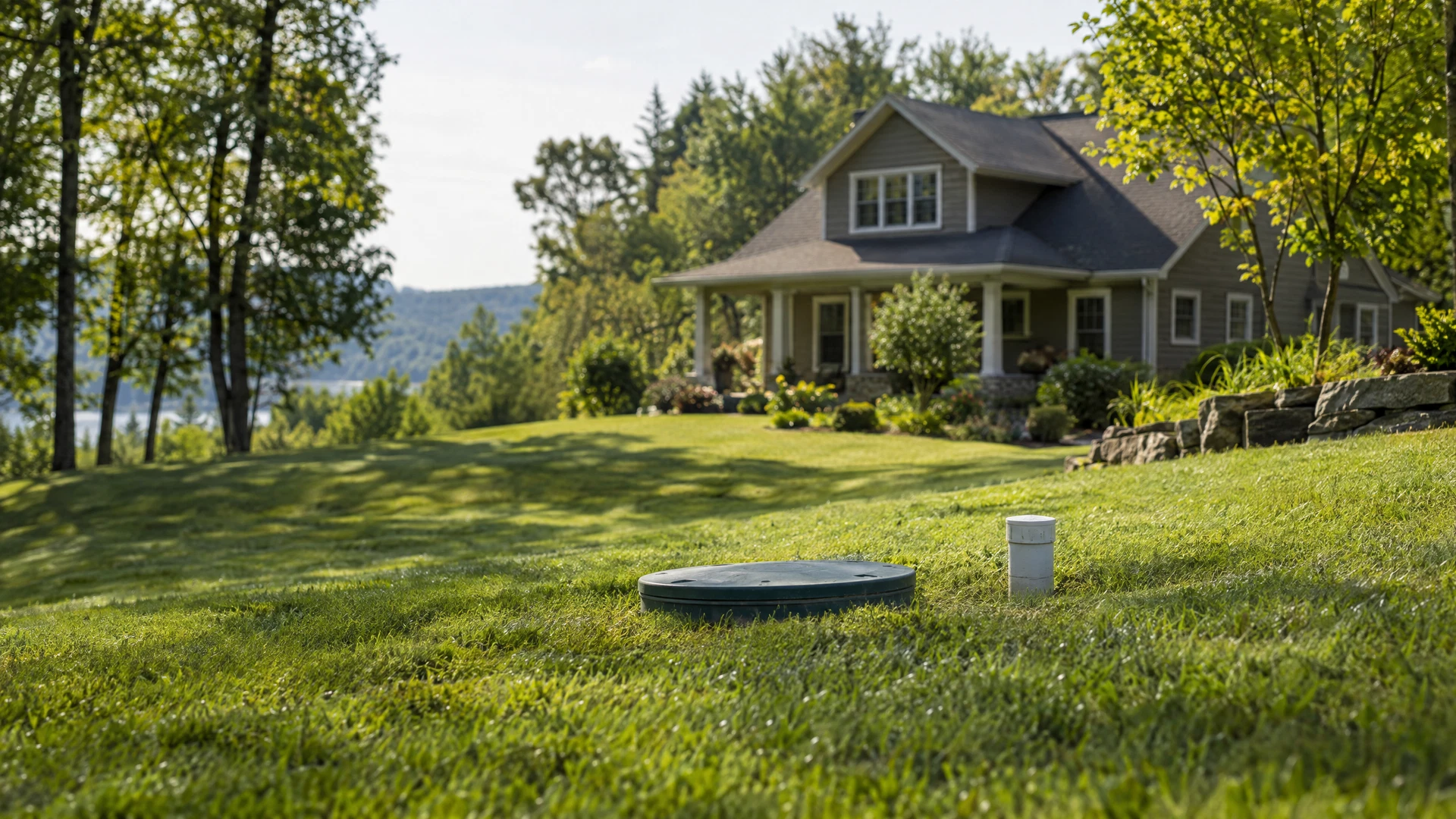
A rural home can look well cared for while its wastewater system remains largely out of sight. Before buying a property with a septic system in Greater Binghamton or the Southern Tier, give that system its own attention rather than assuming a general home inspection answers every underground question.
GR8 Home Inspections offers septic load and dye testing as a limited evaluation of operation under the conditions present. Owner and lead inspector Doug Skinner, CMI, provides personal attention and straightforward explanations. This service can help identify concerns, but it is not a full septic inspection, certification or guarantee of future performance.
What load and dye testing can tell you
Load testing introduces water through household plumbing to observe the system's response. Tracing dye can help identify wastewater reaching observable locations, such as the ground surface or a drainage outlet. Visible wastewater or dye where it should not appear is a reason for further investigation.
The useful question is whether concerns become evident during the evaluation, not whether the entire buried system has been proven sound. Discuss the proposed scope with Doug before booking, including site access, water availability and any circumstances that could limit testing.
Gather the history before the visit
EPA guidance emphasizes reviewing system design, installation and maintenance records. Ask the seller for documents early; your local health or permitting department may also have plans or permits. Missing records leave important questions unanswered, even when the yard appears normal.
- Request available permits, installation drawings and the locations of the tank and absorption field.
- Collect pumping dates, maintenance invoices, repair records and previous inspection findings.
- Ask about past backups, odors, wet ground, alarms and any changes in household use.
- Tell Doug about locked areas, obstructed access and known water-supply limitations.
Occupancy and weather change the picture
A vacant or lightly used home may not reveal problems that develop under regular household demand. Recent tank pumping also changes conditions relevant to evaluation. Share when the property was last occupied, the usual number of occupants and the last pumping date; do not arrange pumping immediately before testing without discussing the sequence.
Snow cover and frozen ground can hide evidence and limit meaningful observations. Wet conditions and drainage patterns also need context. Official New York county protocols recognize these issues, but their procedures are county-specific, not a statewide rule or a description of GR8's exact testing method. Ask how conditions affect your property's evaluation.
Does no visible dye mean the system passes?
No. The absence of visible dye during a limited observation period does not establish the condition of every component, treatment effectiveness, adequate design capacity or remaining service life. Dye may not appear immediately, and buried defects can remain unseen.
A broader septic inspection may involve opening tanks, examining internal components and levels, checking pumps and controls, or investigating the distribution box and absorption field. Those tasks are not established by a load and dye test alone. The result is not a warranty, code-compliance determination or substitute for any separate evaluation your transaction requires.
Warning signs deserve specialist follow-up
Sewage backups, persistent odors, slow or gurgling drains, unusually lush growth over the field, and soggy or standing water near system components warrant attention. A single symptom does not identify its cause; a septic professional can investigate whether the concern involves plumbing, the tank, distribution or the absorption field.
If testing reveals a concern, arrange specialist assessment before treating the issue as resolved. Contact the local health department about applicable requirements and approved repair procedures. For a property with a private well, consider water quality testing separately: septic dye observations do not establish that drinking water is safe.
Discuss the septic system before closing
Call or text Doug at (607) 222-2256 with the property's occupancy history, available records and purchase deadline to discuss testing scope and coordination.
Schedule an inspectionFurther reading & useful resources
- US EPA: Frequent Questions on Septic Systems
- New York State Department of Health: Septic System Operation and Maintenance
- Cornell Cooperative Extension: Your Septic System — What to Know When Buying or Selling a Home
- Cayuga County Health Department: Wastewater Treatment System Inspection Protocol, 2026